
Part II: Flawless Trade Show Execution and Follow-Up
By Frankie Wenson, Strategic PR/Marketing Advisor, Merlot Marketing
Let’s continue where we left off last month with the prep immediately before show time.
Spokespeople get ready to shine. We work with media-facing client representatives to make sure they have everything needed to succeed in an interview, starting with proper media training and prepared responses to all lines of questioning. Our role doesn’t always stop at preparation. When appropriate, our team is ready to step in as an extension of the client’s communications department, helping facilitate media conversations, provide brand context, and ensure reporters get the information they need while keeping interviews on track.
Journalists leave interviews with a media kit card with links to an approved online repository of releases and imagery. Exhibiting clients are announced to industry press using “attending” news releases ahead of the show, so the right people arrive at the booth already primed. We work with client contacts to complete exhibitor profiles in the show portal and load approved assets into the press room where reporters go looking. As a working communication benchmark, we plan for the long game, not a show-week spike. Consider:
- A substantive news release roughly monthly through the ramp-up, tightening as the show nears.
- Social content several times a week on each active platform, surging during show days.
- At least a monthly email touch to your database, with segmented sends timed to the news.
- Staggered pitching matching the rhythm above.
- If your program only comes alive the week of the show, you’ve already left ROI on the table.
During the Show: Presence with a Plan
On the floor, the job shifts from preparation to protection and opportunity. Our team is on-call for media stop-bys, introducing journalists to spokespeople or gently handling vendor pitches so your team can stay focused on buyers and press. We also walk the show floor with intent, including regular visits to the press lounge to engage journalists where appropriate. You never know when a chance hallway conversation results in thoughtful, timely coverage!
Even with months of planning, trade shows have a way of creating unexpected opportunities. A reporter stops by without an appointment. A product demonstration draws a crowd. A social post takes off. The brands that get the most value are the ones prepared to adapt in real time while staying true to their overall strategy.
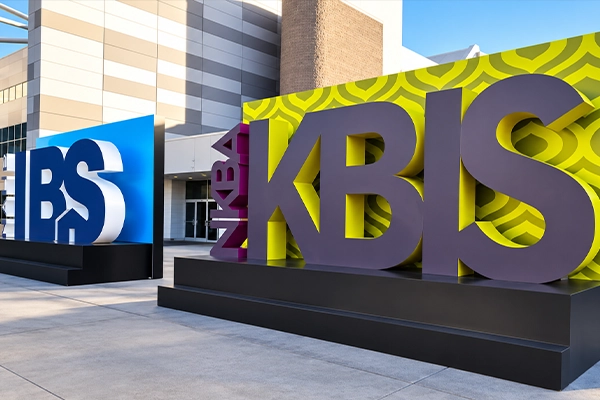
This is where all that upstream work quietly pays off. A fiber cement innovator like Nichiha heading into IBS, a kitchen and bath innovator like Empava preparing for KBIS, or a premium outdoor kitchen brand like American Outdoor Grill doesn’t want its spokespeople improvising in front of a reporter on deadline. They want people who can hold the brand’s story and the industry’s larger conversation in the same breath, because that’s what earns the follow-up.
After the Show: Where Most Brands Quit Too Early
The show floor closing is the moment the least disciplined brands exhale and stop. It’s the exact moment the return starts to materialize.
Follow-up with media happens immediately while the conversation is still warm, before the next fifty pitches bury yours. We share additional materials a journalist may need to build a brand storyline with authority and credibility. Then internally the client team gets a real accounting of the tradeshow investment: an After Action Report that lays out the show overview, a pitching summary, the news releases with their distribution and engagement numbers, PR.0™ highlights, and a SWOTT analysis (the extra ‘T’ is ‘Trends’) so the next show builds on the success of the last. And the pitching doesn’t stop; it keeps the momentum going long after the badges come off.
Underneath all of it is a way of measuring that separates activity from impact. It’s easy to report outputs (what got created) and outtakes (how it was received). Wherever possible, we help our clients connect the tradeshow investment to outcomes, or business impact. Impressions look good in a deck. Outcomes are what justify the line item.
The Gut Check
None of this is a checklist to run once and file away. It’s a way of thinking about a trade show as a story told deliberately over months, not a booth rented for three days.
So, here’s the honest self-audit. Does your positioning hold up under a crowded floor, or does it get fuzzy the moment you leave the booth? Is your media outreach mapped to editorial calendars, or reacting to them? Do you walk away from the show with an After Action Report and a SWOTT, or with a stack of business cards and good intentions? Are you measuring outcomes, or counting impressions? And is the momentum still building a month later, or did it end when the lights dimmed on the show floor?
If those questions land uncomfortably, that’s useful information. The gap between a brand that attended a show and a brand that won one is almost never the booth. It’s the ninety percent nobody photographs.
The whole reason a brand brings in a partner is simple: to influence an audience it can’t reach on its own. A trade show is where that need gets concentrated into a few high-stakes days, and where the difference between showing up and standing out is everything.
The strongest trade show programs don’t begin with booth renderings or giveaway ideas. They begin with a strategy that connects public relations, social media, digital marketing, email, creative, advertising, and sales support into one cohesive effort. When every piece is working together, the booth becomes more than a destination: it becomes the payoff.