
Smart Companies Don’t Attend Trade Shows. They Orchestrate Them.
By Debi Hammond, Founder + CEO, Merlot Marketing
Companies spend hundreds of thousands to millions on their trade show booths and $0 creating anticipation for what’s inside it.
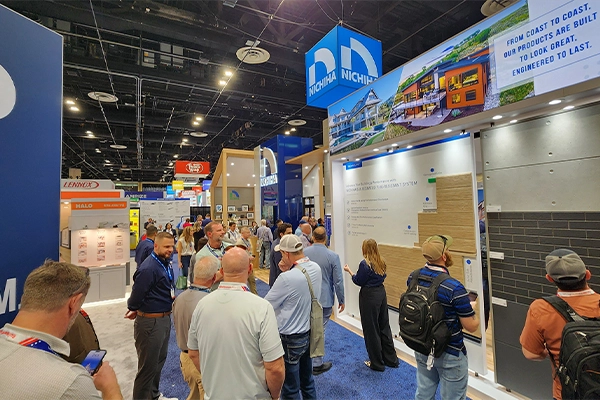
I have watched this happen for 25 years, across shows like KBIS, IBS, and SuperZoo, in industries as different as home and building products and pet retail. The instinct is always the same: build something impressive, put it on the show floor, and assume the crowd will find it. Apparently the strategy was: build booth, add lighting, hope for magic.
Hope is not a trade show strategy. It’s a booth, populated by people who were already coming to the show anyway.
The Booth Was Never the Story
Here’s what I’ve learned from two decades of pre-show planning meetings, on-site activations, and post-show wrap reports: the booth is not the campaign. It’s the set. The campaign is everything that gets someone to walk onto that set already knowing why they should care.
By the time a buyer, builder, designer or dealer reaches your aisle, the decision about whether you matter has usually already been made somewhere else: in their inbox, on LinkedIn, in a trade publication they read on the plane. If that decision was made in your favor, the booth converts interest into a relationship. If nobody built the anticipation, the booth is just square footage with better lighting.
Trade Shows Are a Three-Act Story, Not a Single Day
Most companies plan for the show. Few plan for the arc around it.
The brands that consistently win floor traffic, editor attention, and real pipeline treat the show as three acts, not one. Before the show, they’re priming the market: teasing the announcement, briefing key editors and influencers under embargo, seeding content that makes people want to see the thing in person instead of just reading about it. During the show, they’re not manning a booth so much as running a live newsroom: capturing content in real time, feeding it back out while the show is still happening, making sure the energy on the floor doesn’t stay trapped on the floor. After the show, most companies go dark. That’s the single biggest miss I see. The team goes home exhausted, and the momentum they spent six-plus figures building simply stops. The best brands are just getting started: nurture sequences, retargeting, the trade coverage that takes weeks to land, the relationships that convert into specifications months later.
Anticipation, activation, amplification. Skip any one of the three, and the other two are working at a third of their potential.
The Booth Isn’t the Budget Line That Fails You
Nobody gets fired for approving a beautiful booth. People quietly get fired for a beautiful booth nobody walked into on purpose.
The real trade show mistake companies make isn’t underspending, it’s misallocating. I’ve sat across the table from executives who will authorize an enormous spend on booth design without blinking, then balk at a fraction of that for the press outreach, influencer briefings, and content capture that actually get people to the booth with intent. That’s backwards. A booth without a story is furniture. A story without a booth is still a story; somebody’s writing about it whether or not you had a presence.
Sophistication Is a Strategy, Not a Look
I’ll say the quiet part: most trade show marketing plans I inherit when we start with a new client aren’t strategies. They’re checklists. Book the space. Order the graphics. Print the one-sheets. Show up. None of that is wrong, exactly. It’s just not a plan for anyone to care.
A real plan starts with a single question: what does someone need to already believe before they get to our booth? Everything else, the press pitch, the influencer partnership, the pre-show email, the social countdown, the executive briefing, exists to answer that question before the show floor ever opens.
What This Actually Looks Like
At KBIS, that might mean an embargoed product briefing with the editors who cover kitchen and bath a full news cycle before the doors open, so coverage is live the morning the show starts, not two weeks after everyone’s gone home. At IBS, it might mean a builder-facing case study campaign that runs for a month beforehand, so a product that’s new to the market isn’t new to the audience by the time they’re standing in front of it. At SuperZoo, it might mean seeding retail buyers with a sample and a story before they ever set foot on the floor, so the meeting at the booth is a confirmation, not an introduction.
Different industries. Same principle. The floor is the moment the story gets tested in person. It is not the moment the story begins.
The Response Becomes the Result
I’ve watched brands spend fortunes on trade shows and leave with a stack of business cards and not much else. I’ve also watched brands spend a fraction of that, with a real pre-show and post-show plan wrapped around a modest presence, and leave with coverage, qualified leads, and specifications that show up on P&Ls two quarters later.
The difference was never the booth. It was whether anyone bothered to build anticipation, capture the moment, and keep working after the lights came down.
Final thought
Your booth is not your strategy. It’s just where your strategy finally gets to shake hands.